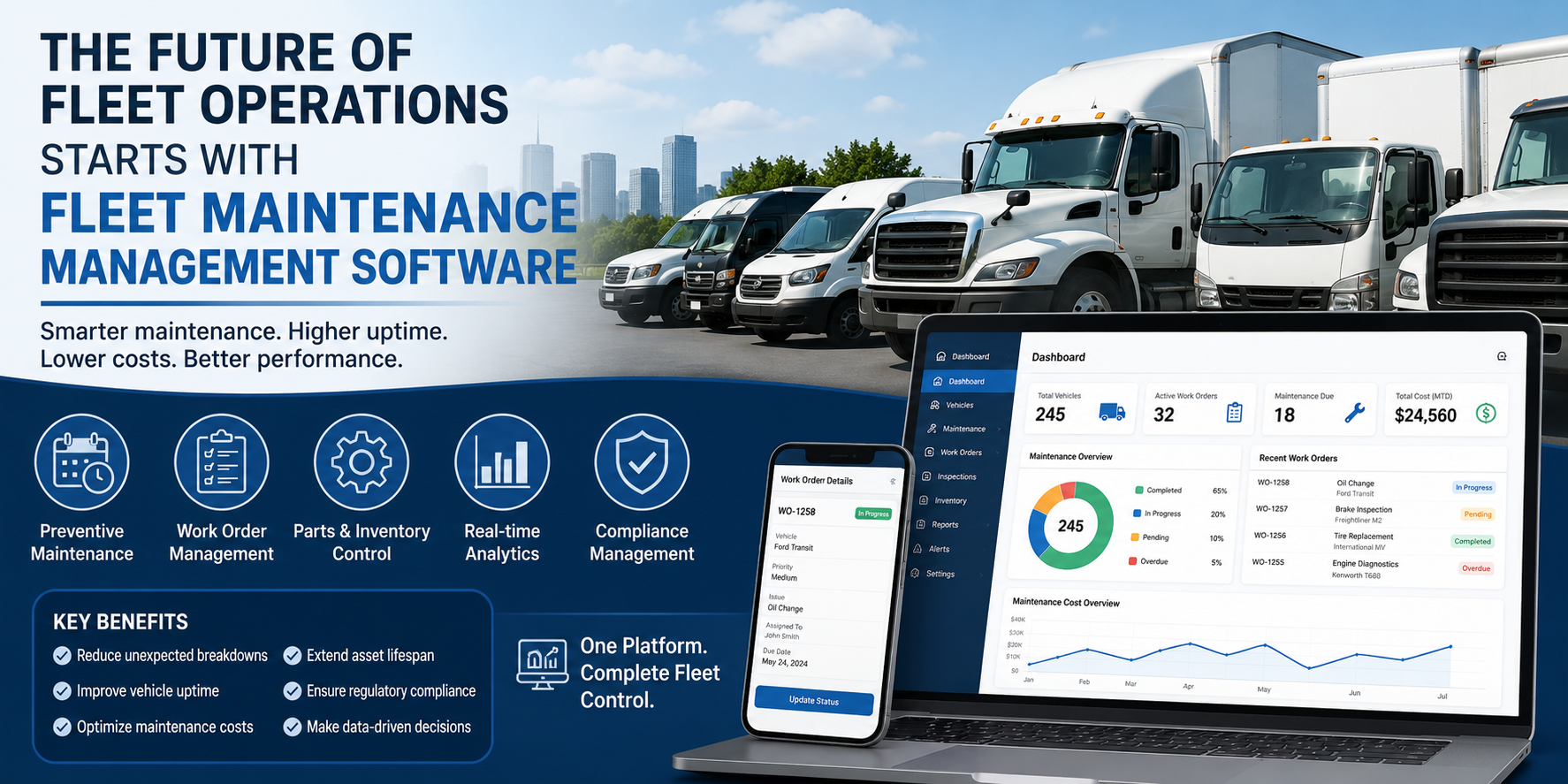
The Future of Fleet Operations Starts with Fleet Maintenance Management Software
Managing a fleet is becoming increasingly complex as businesses grow and customer expectations rise. Whether operating trucks, delivery vans, construction equipment, or service vehicles, keeping assets properly maintained is essential for productivity and profitability. Traditional maintenance tracking methods, such as spreadsheets and paper records, often lead to missed services and costly downtime.
This is why fleet maintenance management software has become a critical tool for modern fleet operations. It helps businesses automate maintenance schedules, improve vehicle reliability, reduce repair costs, and gain better control over their fleets. As the industry moves toward smarter, data-driven operations, this software is playing a key role in shaping the future of fleet management.
Why Fleet Maintenance Is Critical for Modern Fleets
The Hidden Cost of Vehicle Downtime
Every minute a vehicle spends off the road can impact productivity and profitability. Unexpected breakdowns often lead to missed deliveries, delayed projects, dissatisfied customers, and expensive emergency repairs. While many fleet managers focus on fuel expenses and labor costs, downtime frequently becomes one of the largest hidden expenses within fleet operations.
A single truck breakdown can create a chain reaction of operational challenges. Drivers may be unable to complete scheduled routes, replacement vehicles may need to be deployed, and repair costs often increase when maintenance issues are ignored for too long. These challenges become even more significant for organizations operating large fleets across multiple locations.
Fleet maintenance management software helps address this issue by providing real-time visibility into vehicle health and maintenance schedules. Instead of reacting to breakdowns after they occur, businesses can identify potential problems early and schedule maintenance before costly failures happen.
How Maintenance Impacts Business Performance
Vehicle maintenance directly affects nearly every aspect of fleet performance. Well-maintained vehicles consume less fuel, operate more efficiently, experience fewer breakdowns, and maintain higher resale values. They also contribute to improved driver safety and customer satisfaction.
Businesses that prioritize preventive maintenance often experience lower operating costs and stronger long-term profitability. However, achieving these results requires consistent tracking, accurate scheduling, and reliable data management. Fleet maintenance management software simplifies these tasks by centralizing maintenance information and automating many routine processes.
Understanding Fleet Maintenance Management Software
What It Is and How It Works
Fleet maintenance management software is a digital solution designed to help organizations manage vehicle maintenance activities more effectively. It serves as a centralized platform where fleet managers can track inspections, monitor repair histories, schedule preventive maintenance, manage work orders, and analyze fleet performance.
Rather than relying on manual systems, the software automates many maintenance-related tasks. It collects and organizes data from multiple sources, allowing fleet managers to make informed decisions based on accurate and up-to-date information.
The software can also integrate with telematics systems, GPS tracking devices, fuel management platforms, and other fleet technologies. This integration creates a comprehensive view of fleet operations and supports more efficient maintenance planning.
Core Functions of a Modern System
Modern fleet maintenance management software goes far beyond basic scheduling. It provides detailed reporting, automated alerts, inventory management capabilities, compliance tracking, and performance analytics. These features enable businesses to manage maintenance operations with greater precision and efficiency.
By consolidating maintenance data into a single platform, organizations gain better visibility into vehicle performance trends, repair costs, and service histories. This level of insight helps managers identify opportunities for improvement and make proactive decisions that support long-term operational goals.
Essential Features That Deliver Real Value
Automated Maintenance Scheduling
One of the most valuable features of fleet maintenance management software is automated scheduling. Maintenance intervals can be established based on mileage, engine hours, fuel consumption, or calendar dates. The system automatically generates reminders when service is due, helping organizations avoid missed maintenance events.
Automated scheduling reduces administrative workload while ensuring that critical maintenance tasks are completed on time. This consistency helps extend vehicle lifespan and minimizes the risk of unexpected breakdowns.
Work Order Management
Managing maintenance work orders manually can be time-consuming and prone to errors. Fleet maintenance management software streamlines this process by creating, assigning, tracking, and documenting work orders electronically.
Technicians can access detailed repair information, record completed tasks, and update maintenance records in real time. This improves communication between maintenance teams and fleet managers while ensuring accurate documentation.
Vehicle Inspection Tracking
Regular inspections are essential for maintaining fleet safety and compliance. Modern software solutions allow organizations to digitize inspection processes, making it easier to identify issues before they escalate into major repairs.
Inspection results are stored electronically, creating a complete maintenance history for each vehicle. This documentation supports regulatory compliance and provides valuable insights into recurring maintenance concerns.
Parts and Inventory Control
Maintenance operations often depend on having the right parts available at the right time. Fleet maintenance management software helps organizations monitor inventory levels, track part usage, and manage supplier relationships more effectively.
Improved inventory control reduces delays caused by unavailable parts and helps businesses avoid unnecessary inventory expenses.
Reporting and Analytics
Data-driven decision-making has become a major competitive advantage in fleet management. Advanced reporting tools provide insights into maintenance costs, vehicle reliability, technician productivity, and fleet performance trends.
These analytics help managers identify inefficiencies, optimize maintenance strategies, and allocate resources more effectively.
Key Benefits of Fleet Maintenance Management Software
Reduced Operating Costs
One of the primary reasons organizations invest in fleet maintenance management software is cost reduction. Preventive maintenance helps minimize expensive repairs while improving vehicle efficiency. Better maintenance planning also reduces labor costs and extends asset lifespan.
When maintenance activities are properly managed, businesses can avoid many of the expenses associated with reactive repairs and emergency breakdowns.
Improved Fleet Reliability
Reliability is essential for successful fleet operations. Customers expect timely deliveries and dependable service, while businesses rely on vehicles to generate revenue. Fleet maintenance management software supports reliability by ensuring that maintenance activities are performed consistently and proactively.
As a result, organizations experience fewer breakdowns, improved vehicle availability, and stronger overall performance.
Enhanced Regulatory Compliance
Many industries operate under strict safety and maintenance regulations. Failure to comply with these requirements can result in fines, legal issues, and reputational damage.
Fleet maintenance management software simplifies compliance by maintaining detailed maintenance records, inspection histories, and service documentation. This makes it easier to demonstrate compliance during audits and inspections.
Better Decision-Making Through Data
Successful fleet management requires access to accurate information. Software solutions provide comprehensive data that supports strategic decision-making and continuous improvement.
Fleet managers can analyze maintenance trends, evaluate vehicle performance, and identify opportunities to reduce costs or improve efficiency. This level of visibility helps organizations make smarter business decisions based on facts rather than assumptions.
Real-World Applications Across Industries
Trucking and Logistics Companies
Transportation and logistics providers depend on vehicle uptime to meet customer commitments. Fleet maintenance management software helps these businesses schedule maintenance efficiently while minimizing disruptions to delivery operations.
By monitoring vehicle health and tracking maintenance requirements, logistics companies can improve reliability and maintain consistent service levels.
Construction Equipment Fleets
Construction businesses often operate expensive equipment under demanding conditions. Equipment downtime can delay projects and increase costs significantly.
Fleet maintenance management software helps construction companies monitor equipment usage, schedule preventive maintenance, and extend asset lifespan through proactive maintenance strategies.
Utility and Service Vehicles
Utility companies and field service organizations rely on vehicles to support essential operations. Maintaining vehicle reliability is critical for responding quickly to customer needs and service requests.
Software solutions help these organizations manage maintenance schedules while ensuring that vehicles remain available when needed most.
Government and Municipal Fleets
Government agencies often manage large and diverse vehicle fleets. Fleet maintenance management software improves accountability, reduces operating costs, and supports compliance with public-sector regulations.
The ability to centralize maintenance data also improves transparency and reporting capabilities.
How to Choose the Right Fleet Maintenance Management Software
Evaluating Business Requirements
Every organization has unique operational needs. Before selecting software, businesses should assess fleet size, maintenance complexity, reporting requirements, and integration needs.
A clear understanding of these factors helps ensure that the chosen solution aligns with long-term business objectives.
Scalability and Integration Considerations
As businesses grow, their maintenance requirements evolve. Choosing scalable software allows organizations to expand without replacing existing systems.
Integration capabilities are equally important. The software should work seamlessly with telematics platforms, accounting systems, fuel management tools, and other operational technologies.
User Experience and Support
Even the most powerful software will struggle to deliver value if employees find it difficult to use. Intuitive interfaces, mobile accessibility, and responsive customer support contribute significantly to successful implementation and adoption.
Organizations should prioritize solutions that provide comprehensive training resources and ongoing technical assistance.
Emerging Trends Shaping the Industry
Artificial Intelligence and Predictive Maintenance
Artificial intelligence is changing the way maintenance decisions are made. Predictive maintenance technologies analyze vehicle data to identify potential failures before they occur.
This proactive approach allows organizations to schedule repairs at the optimal time, reducing downtime and improving asset reliability.
Mobile-First Fleet Management
Mobile applications are becoming standard features within fleet maintenance management software. Technicians and drivers can access maintenance information, complete inspections, and update records directly from smartphones and tablets.
This mobility improves communication and accelerates maintenance workflows.
Cloud-Based Fleet Solutions
Cloud technology has increased the accessibility and flexibility of fleet management systems. Organizations can access data from any location while benefiting from automatic updates and enhanced security.
Cloud-based platforms also reduce infrastructure costs and simplify software deployment.
Telematics and Real-Time Monitoring
The integration of telematics technology provides unprecedented visibility into vehicle performance. Real-time monitoring enables fleet managers to track engine diagnostics, fuel consumption, driver behavior, and maintenance requirements more accurately.
These insights support more informed maintenance decisions and improve overall fleet efficiency.
Conclusion
The future of fleet operations is being shaped by technology, data, and proactive maintenance strategies. As fleets become larger and more complex, organizations can no longer rely on outdated methods to manage maintenance activities effectively.
Fleet maintenance management software provides the tools necessary to improve vehicle reliability, reduce operating costs, enhance compliance, and maximize asset performance. By automating maintenance processes and delivering valuable operational insights, these platforms help businesses transition from reactive maintenance practices to a more strategic and preventive approach.
Organizations that invest in fleet maintenance management software today position themselves for long-term success in an increasingly competitive environment. As emerging technologies such as artificial intelligence, telematics, and predictive analytics continue to evolve, the role of maintenance software will become even more important. Businesses that embrace these innovations will be better equipped to optimize operations, improve profitability, and build a more efficient future for their fleets.
